
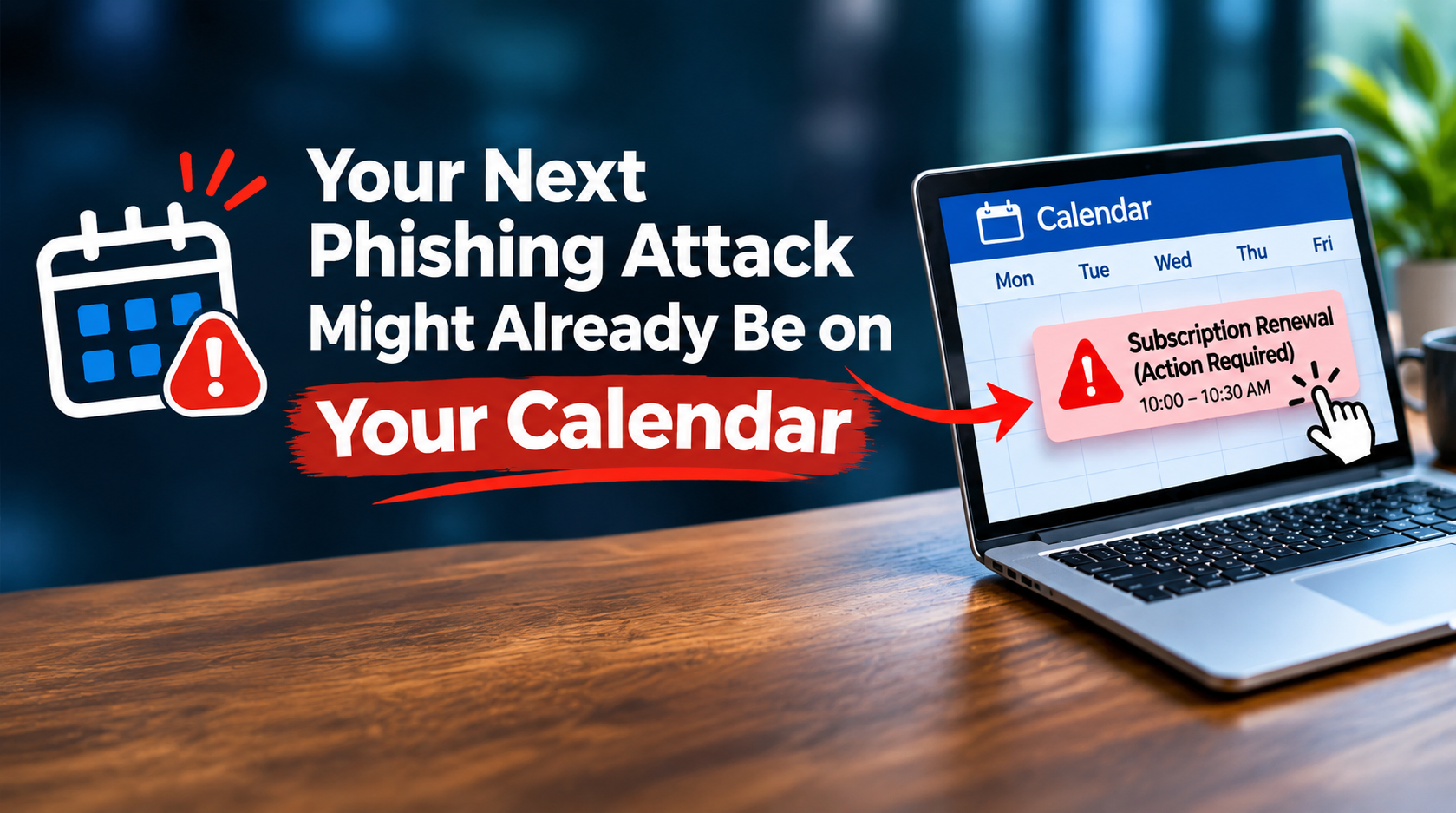
If you're running a private equity firm, boutique investment bank, or M&A advisory practice, your team lives in Outlook, Microsoft 365, Google Workspace, and virtual data rooms. Calendars are packed with management presentations, diligence calls, investor meetings, and closing deadlines. Everyone is moving quickly because, in this business, time really is money. But here's something worth thinking about: What happens when something as ordinary as a calendar invitation becomes the entry point for a cyberattack? A recent article in The Guardian highlights how criminals are using fake meeting invitations, subscription renewals, and payment notices to trick people into clicking malicious links. Some invitations can appear on calendars without the recipient deliberately accepting them. That's a problem when your team is managing multiple transactions and doesn't have time to investigate every unexpected meeting request.
Think about one of your analysts working through a live transaction. They're reviewing CIMs, pulling financial information, coordinating diligence requests, and preparing materials for an investment committee. Their calendar is full. Suddenly, a notification appears about a Microsoft subscription renewal or an unexpected payment. They click to investigate, and they're directed to a convincing fake login page. If they enter their credentials, the attacker may gain access to their account, depending on the firm's security controls. Now think about what's potentially sitting behind that account: confidential seller information, financial models, buyer communications, diligence documents, and transaction schedules. This isn't just another employee falling for a phishing scam. It could become an exposure of information that buyers, sellers, and investors have entrusted to your firm.
Here's where the business risk gets serious. Imagine discovering that an analyst's account has been compromised halfway through an exclusivity period. Your team now has to determine what information was accessed, whether confidential documents were exposed, and whether counterparties need to be notified. Depending on the circumstances, you could be dealing with delayed diligence, additional legal expenses, reputational damage, or a buyer questioning the integrity of the transaction process. The biggest cost may not be the cyber incident itself. It may be the disruption to a deal that was already difficult enough to get across the finish line. For smaller M&A advisory firms and middle-market PE teams, where a handful of people manage enormous amounts of sensitive information, the impact of a single compromised account can be disproportionate to the size of the firm.
The frustrating part is that many of these risks are manageable. You don't necessarily need another expensive platform or a six-month cybersecurity project. Start by understanding how calendar invitations from outside your organization are handled. Make sure your analysts, associates, and executives know that an unexpected calendar invitation deserves the same scrutiny as a suspicious email. Use phishing-resistant multifactor authentication wherever possible, and review who has access to confidential transaction documents. Just as importantly, understand what happens if an account is compromised. Can you quickly revoke access? Can you determine what information was accessed? Can you keep the deal team operating while the incident is investigated? Security controls should protect the transaction without becoming another obstacle to getting the deal done. That's the balance M&A firms need to get right.
Here's my takeaway. You spend weeks evaluating the financial, operational, and legal risks of a potential acquisition. But how much attention are you paying to the technology risks inside your own deal process? A calendar phishing attack might seem like a minor IT issue until it affects a live transaction. Criminals don't need to understand EBITDA multiples or purchase agreements to cause serious problems for an M&A firm. They just need one person to click the wrong link. At PE Tech Partners, we focus on identifying technology, cybersecurity, and AI risks before they become business problems. Because protecting a transaction isn't simply about keeping hackers out. It's about protecting confidential information, preserving trust, and keeping deals moving. The best time to discover a weakness in your deal process is before someone exploits it, not during exclusivity.